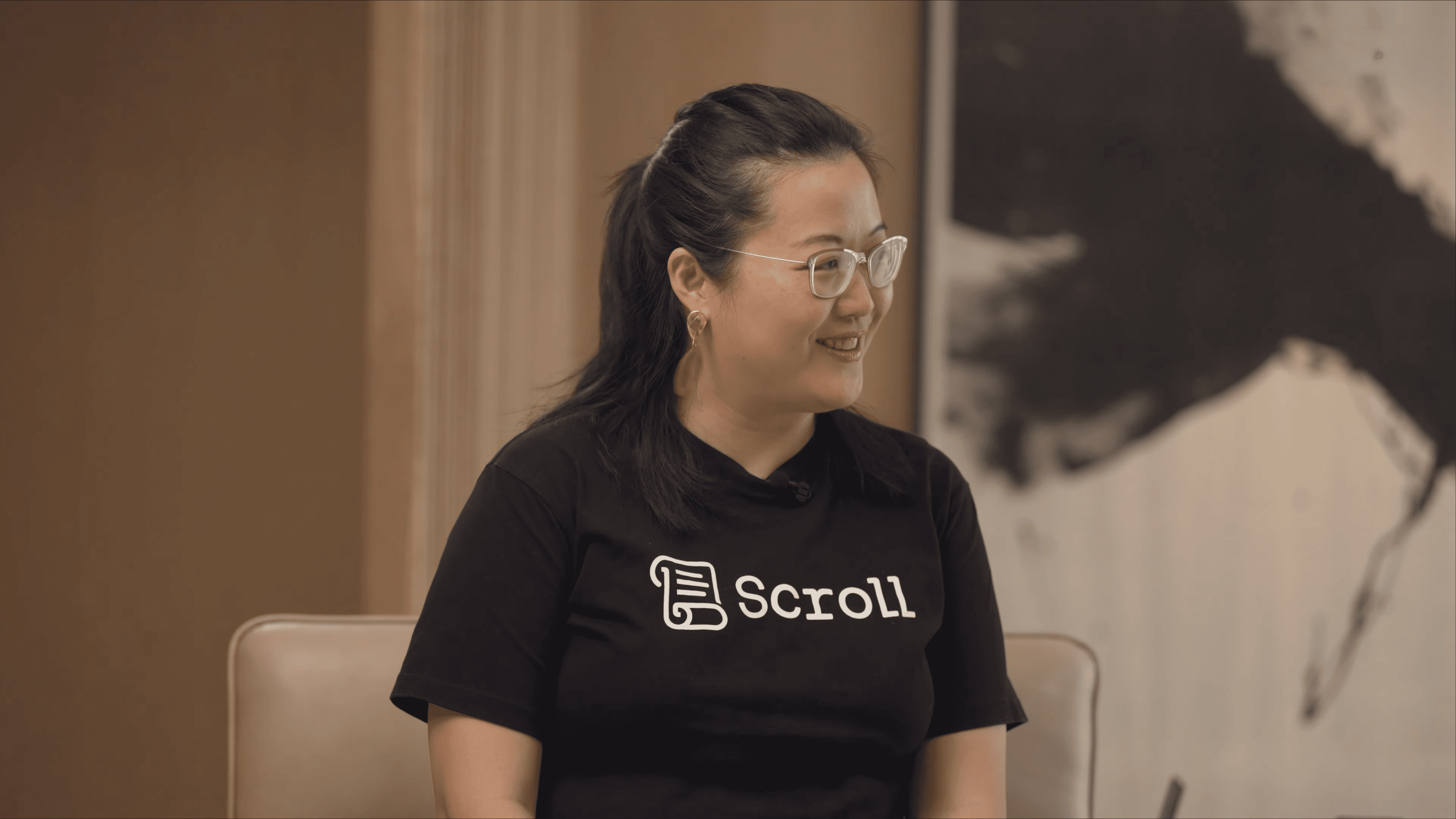
Scroll Founder Interview: Scaling Ethereum with zkEVM

Nov 4, 2025

Infrastructure for Global Financial Access

Scroll is a zkEVM (zero-knowledge Ethereum Virtual Machine)–based Layer 2 blockchain designed to scale Ethereum.

In this conversation, we speak with Sandy Peng, Co-Founder of Scroll, about the project’s developer-first infrastructure, practical applications of ZK technology, and Scroll’s philosophy for expanding global access to financial infrastructure.

Infrastructure for Global Financial Access

Scroll is a zkEVM (zero-knowledge Ethereum Virtual Machine)–based Layer 2 blockchain designed to scale Ethereum.

In this conversation, we speak with Sandy Peng, Co-Founder of Scroll, about the project’s developer-first infrastructure, practical applications of ZK technology, and Scroll’s philosophy for expanding global access to financial infrastructure.

Infrastructure for Global Financial Access

Scroll is a zkEVM (zero-knowledge Ethereum Virtual Machine)–based Layer 2 blockchain designed to scale Ethereum.

In this conversation, we speak with Sandy Peng, Co-Founder of Scroll, about the project’s developer-first infrastructure, practical applications of ZK technology, and Scroll’s philosophy for expanding global access to financial infrastructure.

A Developer-Centric Layer 2 Ecosystem

Sandy Peng began her career in financial regulation, later moved into venture capital, and is now a builder in the blockchain industry as the co-founder of Scroll.

In the interview, she describes her journey as a natural progression — from research, to investment, and ultimately to building real products.

She explains Scroll as a project that emerged at the moment when zero-knowledge (ZK) research, long confined to academia, became ready for real-world application.

This background helps explain why Scroll consistently emphasizes not only technical innovation, but also stability, trust, and real-world usability.

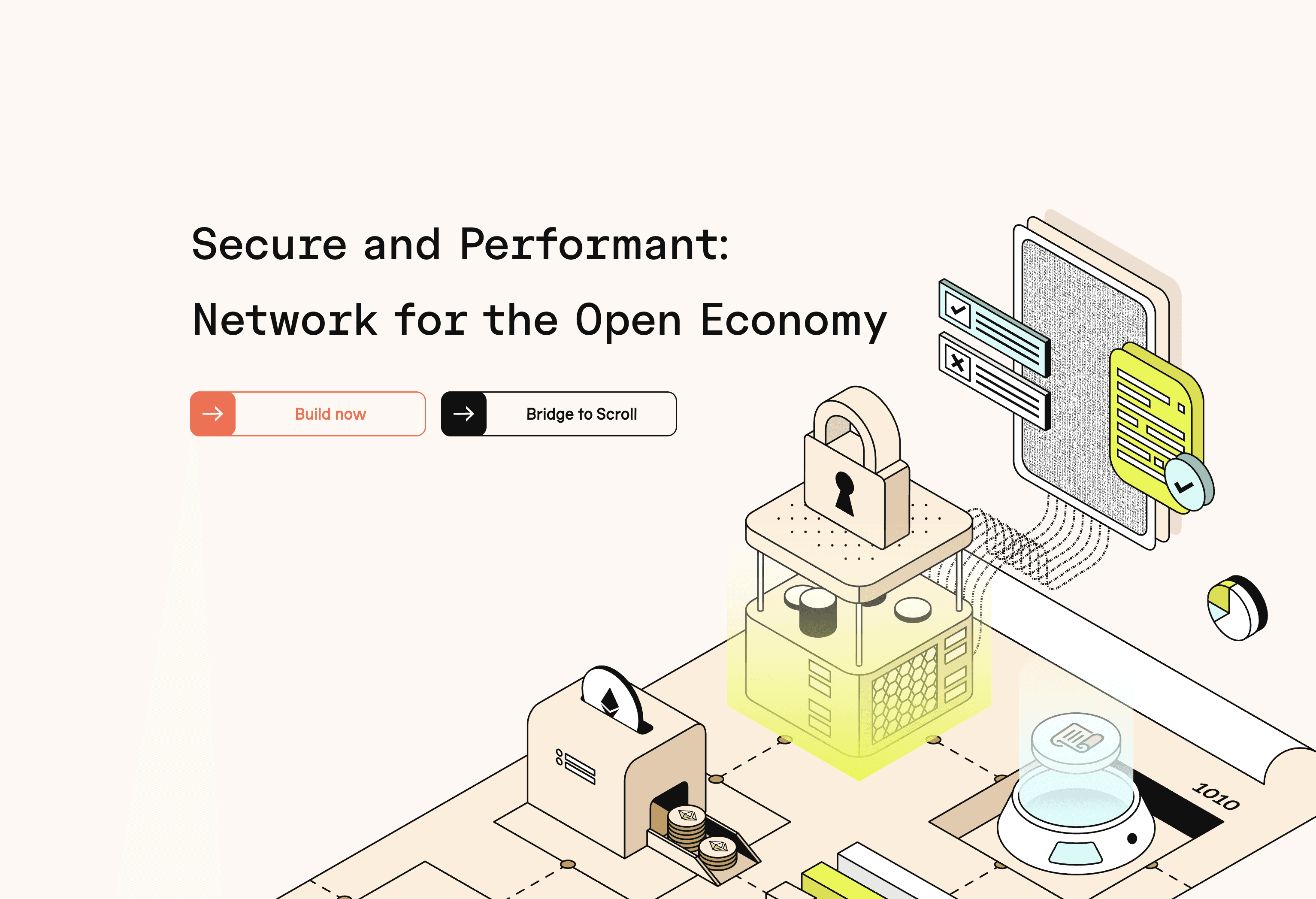
Scroll has designed its infrastructure with the goal of enabling developers to build and ship products immediately, supported by bytecode-level EVM compatibility, over two years of uninterrupted operation, and a track record of zero reorgs.

The network integrates with major services such as AWS and Chainlink, while actively connecting builders with the tools and resources required throughout the development process.

As Sandy notes, even minor instability at the blockchain layer can create cascading effects across DeFi applications. This infrastructure also enables consumer-facing financial services like ether.fi to operate and scale reliably on Scroll.
A Developer-Centric Layer 2 Ecosystem

Sandy Peng began her career in financial regulation, later moved into venture capital, and is now a builder in the blockchain industry as the co-founder of Scroll.

In the interview, she describes her journey as a natural progression — from research, to investment, and ultimately to building real products.

She explains Scroll as a project that emerged at the moment when zero-knowledge (ZK) research, long confined to academia, became ready for real-world application.

This background helps explain why Scroll consistently emphasizes not only technical innovation, but also stability, trust, and real-world usability.

Scroll has designed its infrastructure with the goal of enabling developers to build and ship products immediately, supported by bytecode-level EVM compatibility, over two years of uninterrupted operation, and a track record of zero reorgs.

The network integrates with major services such as AWS and Chainlink, while actively connecting builders with the tools and resources required throughout the development process.

As Sandy notes, even minor instability at the blockchain layer can create cascading effects across DeFi applications. This infrastructure also enables consumer-facing financial services like ether.fi to operate and scale reliably on Scroll.

A Developer-Centric Layer 2 Ecosystem

Sandy Peng began her career in financial regulation, later moved into venture capital, and is now a builder in the blockchain industry as the co-founder of Scroll.

In the interview, she describes her journey as a natural progression — from research, to investment, and ultimately to building real products.

She explains Scroll as a project that emerged at the moment when zero-knowledge (ZK) research, long confined to academia, became ready for real-world application.

This background helps explain why Scroll consistently emphasizes not only technical innovation, but also stability, trust, and real-world usability.

Scroll has designed its infrastructure with the goal of enabling developers to build and ship products immediately, supported by bytecode-level EVM compatibility, over two years of uninterrupted operation, and a track record of zero reorgs.

The network integrates with major services such as AWS and Chainlink, while actively connecting builders with the tools and resources required throughout the development process.

As Sandy notes, even minor instability at the blockchain layer can create cascading effects across DeFi applications. This infrastructure also enables consumer-facing financial services like ether.fi to operate and scale reliably on Scroll.

zkEVM and Ethereum’s Scaling Strategy

Scroll supports Ethereum Layer 1 scalability through zk rollup architecture.

Under current technical conditions, the network can scale to up to 10,000 TPS, with ongoing research aimed at higher throughput as Ethereum itself continues to evolve.

Sandy describes ZK technology as a mathematical tool that addresses both scalability and privacy.

Scroll continues to push ZK toward real-world usability by improving proving speed, efficiency, and exploring different privacy design options.

zkEVM and Ethereum’s Scaling Strategy

Scroll supports Ethereum Layer 1 scalability through zk rollup architecture.

Under current technical conditions, the network can scale to up to 10,000 TPS, with ongoing research aimed at higher throughput as Ethereum itself continues to evolve.

Sandy describes ZK technology as a mathematical tool that addresses both scalability and privacy.

Scroll continues to push ZK toward real-world usability by improving proving speed, efficiency, and exploring different privacy design options.

zkEVM and Ethereum’s Scaling Strategy

Scroll supports Ethereum Layer 1 scalability through zk rollup architecture.

Under current technical conditions, the network can scale to up to 10,000 TPS, with ongoing research aimed at higher throughput as Ethereum itself continues to evolve.

Sandy describes ZK technology as a mathematical tool that addresses both scalability and privacy.

Scroll continues to push ZK toward real-world usability by improving proving speed, efficiency, and exploring different privacy design options.

Stablecoins and Experiments in Real-World Finance

Scroll has also become increasingly involved in the stablecoin ecosystem.

The ZK technology Scroll focuses on goes beyond scalability, serving as core infrastructure that enables Ethereum to achieve stability, privacy, and strong developer experience simultaneously.

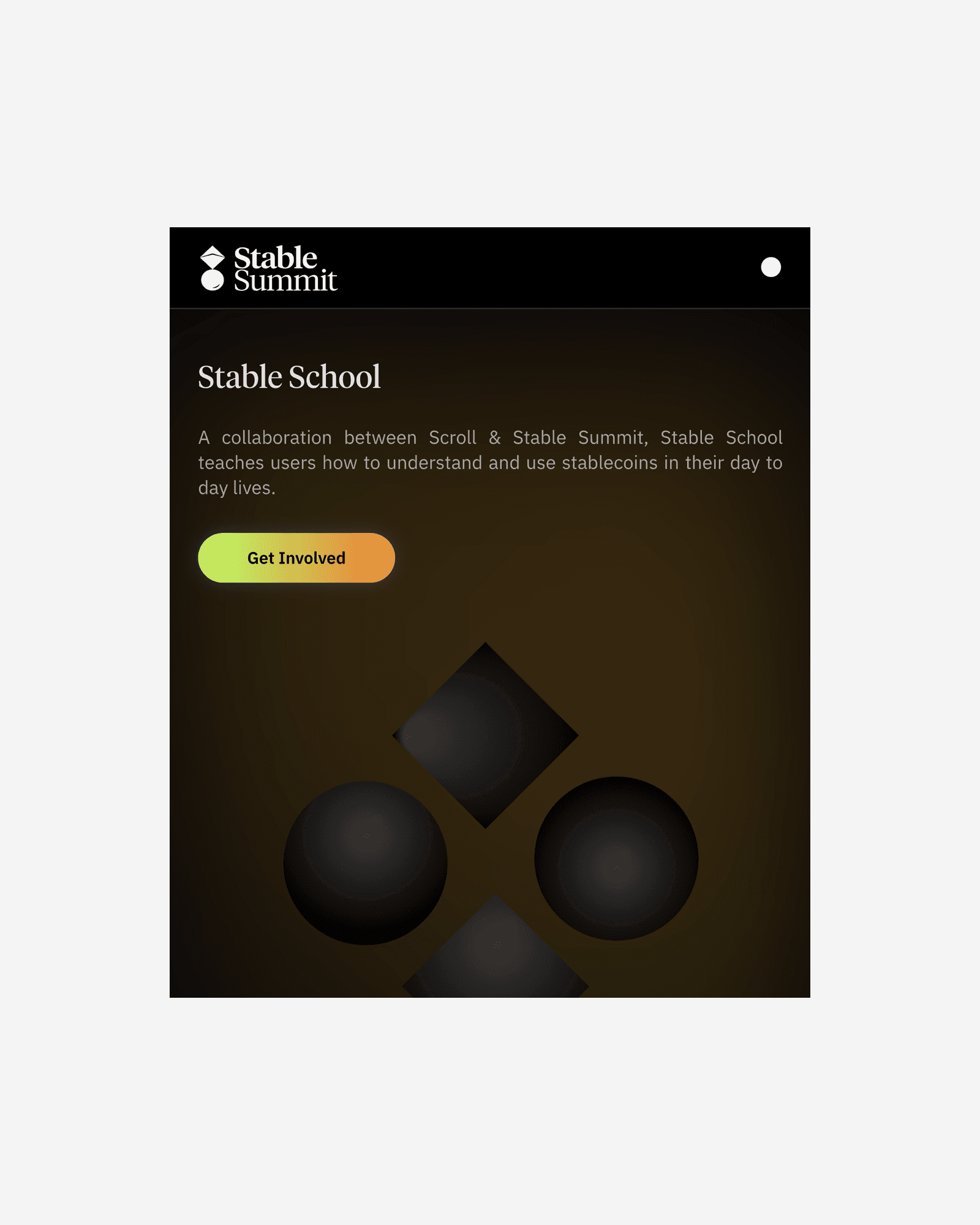
Stable Summit and Stable School are education and research initiatives aimed at reducing information asymmetry around stablecoins, helping users better understand design choices and risk.

Through these efforts, Scroll connects advanced technologies like ZK with their implications in real financial environments.

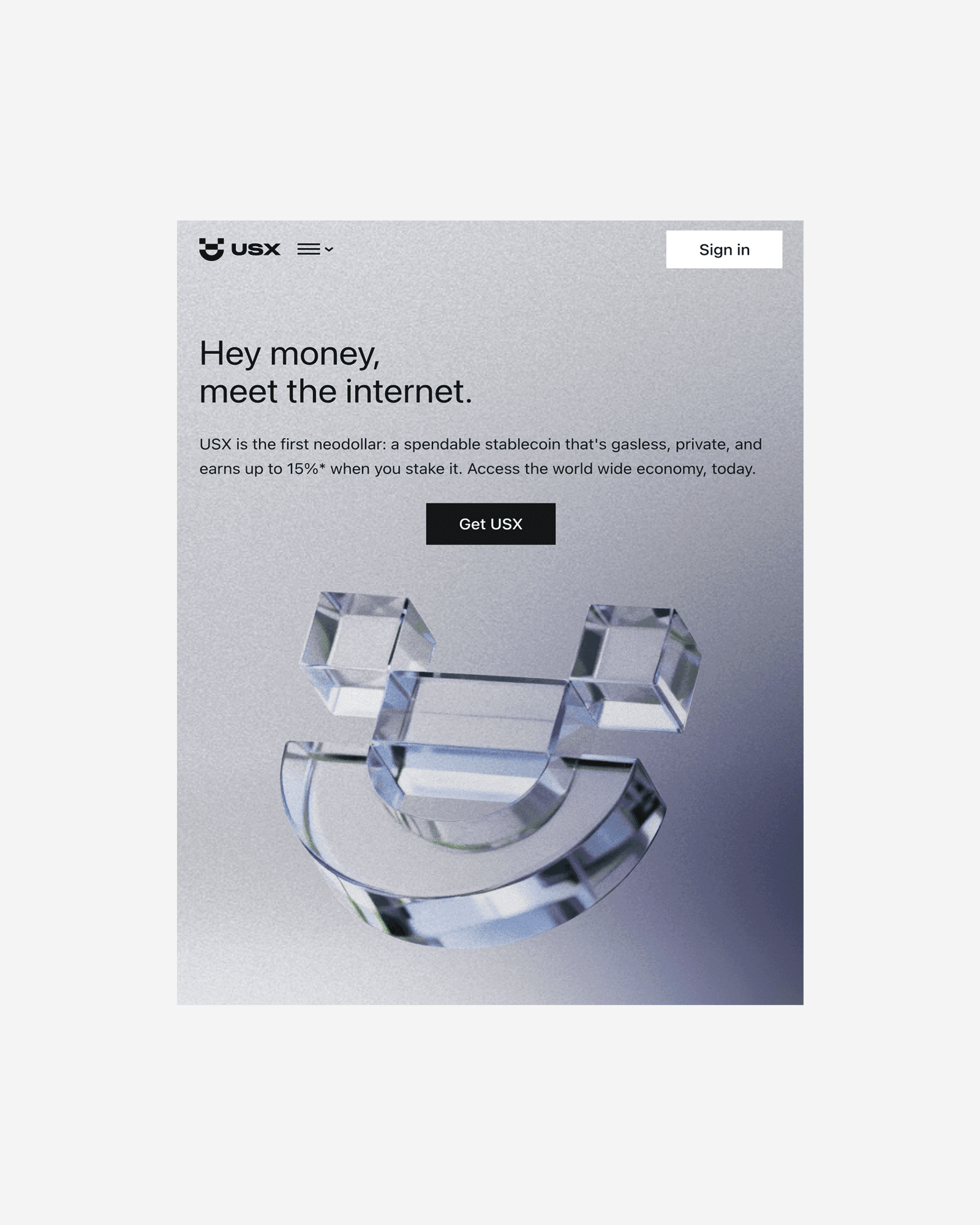
Scroll also supports USX, a ZK-based stablecoin project, continuing experiments that explore how complex financial structures can be delivered to users in a safer and more transparent way.
Stablecoins and Experiments in Real-World Finance

Scroll has also become increasingly involved in the stablecoin ecosystem.

The ZK technology Scroll focuses on goes beyond scalability, serving as core infrastructure that enables Ethereum to achieve stability, privacy, and strong developer experience simultaneously.

Stable Summit and Stable School are education and research initiatives aimed at reducing information asymmetry around stablecoins, helping users better understand design choices and risk.

Through these efforts, Scroll connects advanced technologies like ZK with their implications in real financial environments.

Scroll also supports USX, a ZK-based stablecoin project, continuing experiments that explore how complex financial structures can be delivered to users in a safer and more transparent way.

Stablecoins and Experiments in Real-World Finance

Scroll has also become increasingly involved in the stablecoin ecosystem.

The ZK technology Scroll focuses on goes beyond scalability, serving as core infrastructure that enables Ethereum to achieve stability, privacy, and strong developer experience simultaneously.

Stable Summit and Stable School are education and research initiatives aimed at reducing information asymmetry around stablecoins, helping users better understand design choices and risk.

Through these efforts, Scroll connects advanced technologies like ZK with their implications in real financial environments.

Scroll also supports USX, a ZK-based stablecoin project, continuing experiments that explore how complex financial structures can be delivered to users in a safer and more transparent way.

An Open-Source Philosophy: “Trust Over Code”

One of Scroll’s core philosophies is open source.

As Sandy puts it, “The real moat is not the code, but the network, the user experience, and the community.”

From Scroll’s perspective, open source not only accelerates technological progress, but also enables a level of trust and transparency that closed systems cannot achieve. This philosophy underpins how Scroll connects zkEVM to the practical scaling of Ethereum Layer 1.


An Open-Source Philosophy: “Trust Over Code”

One of Scroll’s core philosophies is open source.

As Sandy puts it, “The real moat is not the code, but the network, the user experience, and the community.”

From Scroll’s perspective, open source not only accelerates technological progress, but also enables a level of trust and transparency that closed systems cannot achieve. This philosophy underpins how Scroll connects zkEVM to the practical scaling of Ethereum Layer 1.


An Open-Source Philosophy: “Trust Over Code”

One of Scroll’s core philosophies is open source.

As Sandy puts it, “The real moat is not the code, but the network, the user experience, and the community.”

From Scroll’s perspective, open source not only accelerates technological progress, but also enables a level of trust and transparency that closed systems cannot achieve. This philosophy underpins how Scroll connects zkEVM to the practical scaling of Ethereum Layer 1.


As an investor and a partner, Narrative actively supports the growth of high-potential AI/Web3 companies.